Water Heater Leaking? What to Do First, and Whether to Replace It
Some leaks are a small part. Others mean the tank is done. Here's how to shut it down safely, read where the water is coming from, and what a replacement costs in 2026.
Rooftop Daily editors choose every topic independently. Some guides include labeled partner offers, and we may be paid when you request a quote. How we make money
In this guide
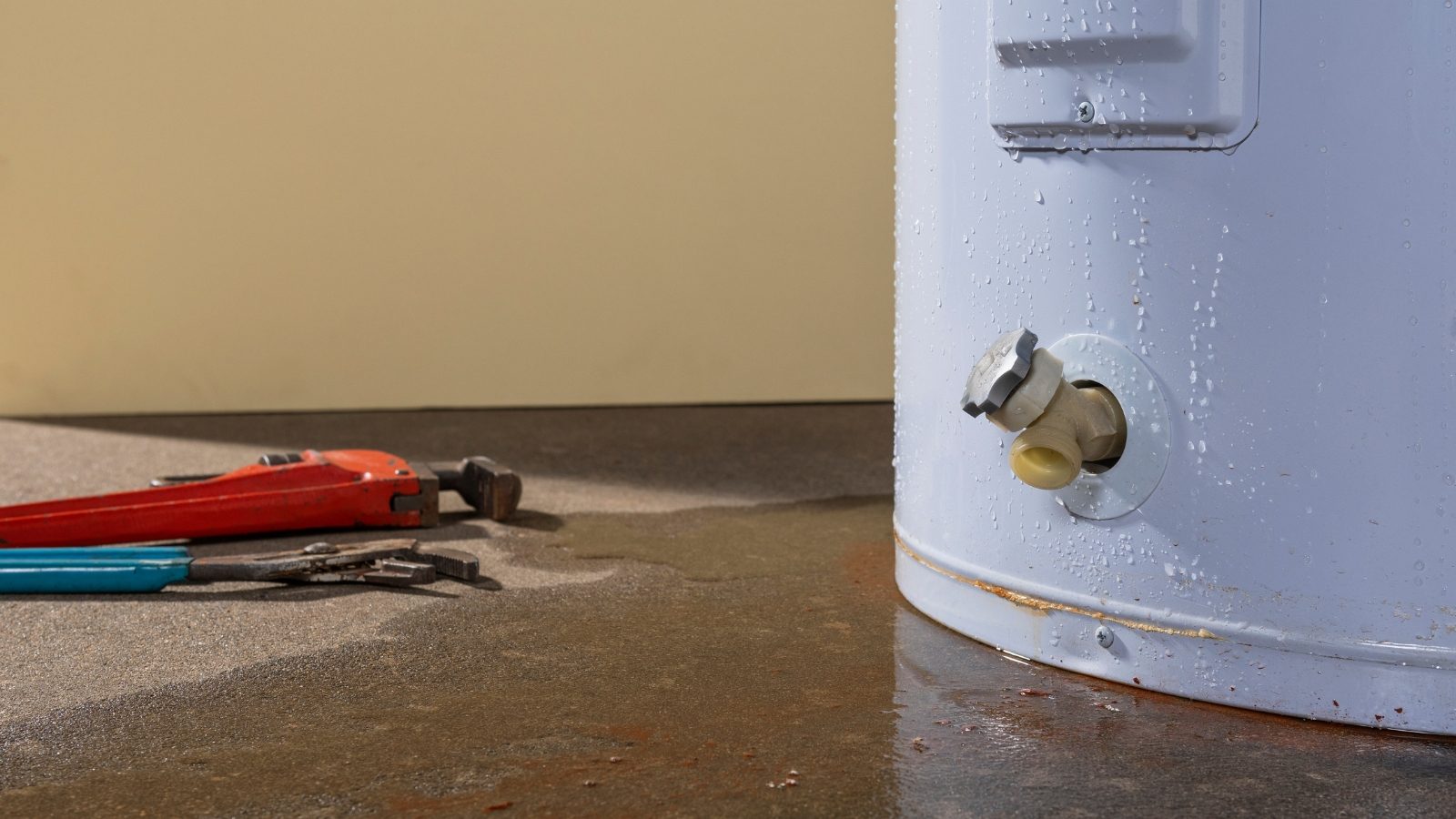
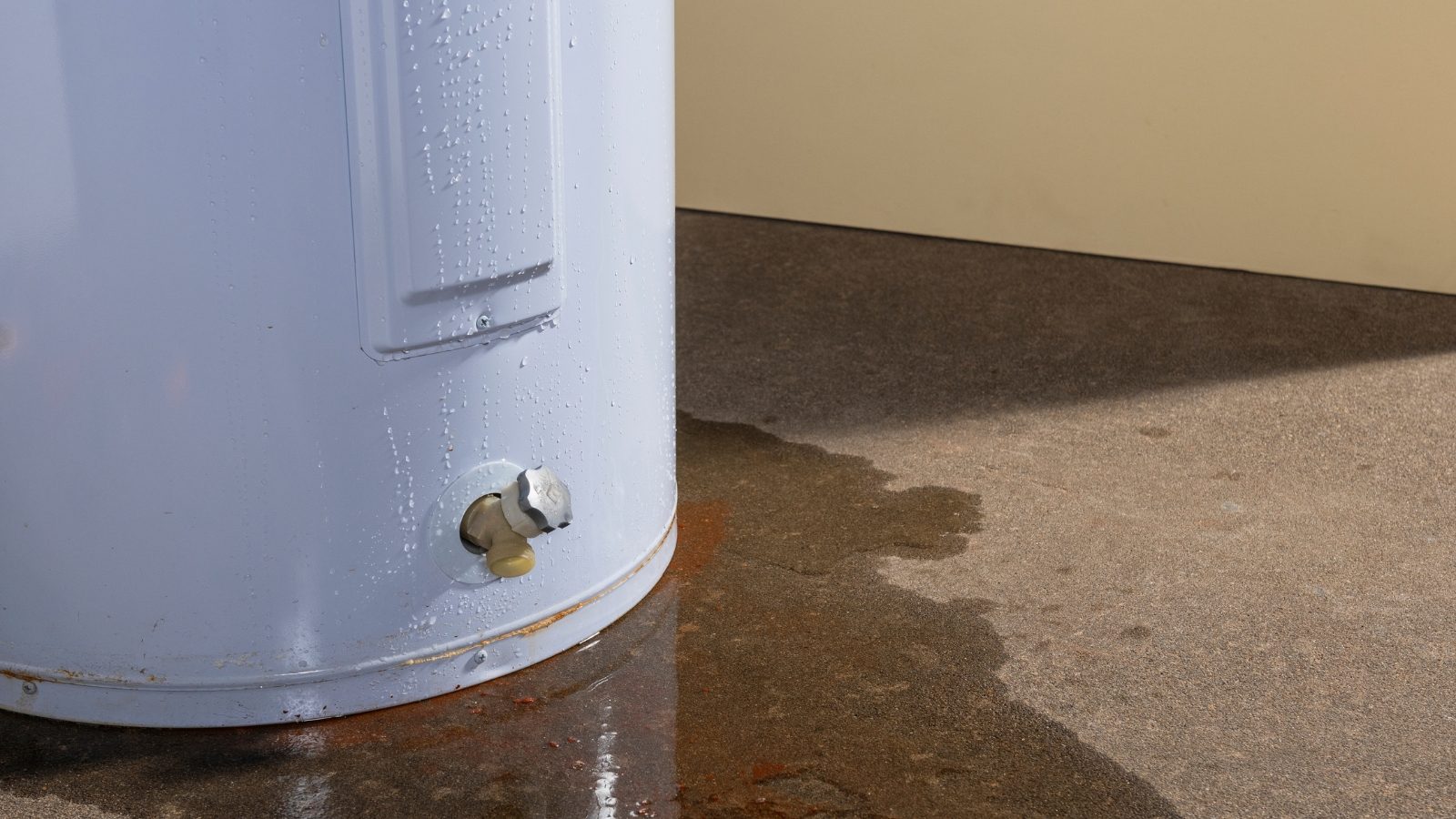
A water heater rarely fails all at once. It usually starts with a damp spot on the floor, a drip from a pipe, or a rust-colored ring around the base that you’ve walked past for a month. What you do in the next hour decides whether this is a small repair or a wet basement, and where the water is coming from decides whether you need a part or a whole new heater.
The short answer
Shut off the cold-water supply to the heater and turn off its power (electric) or gas, following the label on the unit. Then find the source. Leaks from the pipe connections on top, the drain valve near the bottom, or the relief valve on the side can often be repaired. Water coming from the tank itself usually means it has rusted through, and you’ll need a replacement, which This Old House puts at about $1,200 to $2,300 installed for a standard tank.
A common version: a small puddle under the water heater that you mop up, and it’s back a few days later. It’s easy to blame condensation. Then it comes back bigger and rust-colored, and a flashlight shows water seeping from the bottom of the tank. At that point there’s no repair, only a replacement, and the only question is whether you schedule it or it schedules itself.
The first 10 minutes
Call a pro
If water is pooling near an electric heater’s wiring or outlet, or you smell gas, don’t touch the heater. Leave the area and call a plumber, or call your gas utility from outside. The water from a leaking heater can also be scalding.
If it’s safe to approach:
- Turn off the water going in. Find the cold-water pipe on top of the heater and close its shutoff valve. If there isn’t one, or it won’t turn, close the main water shutoff for the house. Our frozen pipes guide shows where that usually is.
- Turn off the energy. For an electric heater, switch off its breaker at the panel. For a gas heater, turn the gas control to the off setting described on the heater’s label or in its manual.
- Protect what’s nearby. Move boxes and anything stored on the floor, and put down towels or a pan.
- Take photos of the puddle, the heater’s label and any damage before you clean up. You’ll want them if you file a claim.
Where is the water coming from?
Dry the area, wait, and watch. A flashlight and a dry paper towel pressed against fittings will show you where it’s wet first.
| Where you see water | What it usually means | Typically |
|---|---|---|
| Pipe connections on top | A loose fitting or failed connector on the water lines | Repairable |
| Relief valve or its discharge pipe on the side | The valve is doing its job (pressure or temperature) or is faulty | Repairable, but find the cause |
| Drain valve near the bottom | A valve that’s loose, worn or not fully closed | Repairable |
| Underneath, or from the tank’s body or seams | The tank has corroded through | Replace the heater |
| Rust-stained water around the base with no obvious drip | Often the tank, from inside | Have a plumber confirm |
If it’s the relief valve
The temperature and pressure relief valve, the T&P valve, is a safety device. It opens to keep the tank from building dangerous pressure or temperature. Never cap or plug it.
A. O. Smith, a major water heater maker, separates two symptoms in its technical guidance. The first is an occasional weep or dribble. That’s usually the valve relieving pressure, often from thermal expansion in a closed plumbing system. The second is a sudden, large release of hot water, which A. O. Smith attributes to a malfunctioning thermostat. Either one is a call to a plumber, who may add an expansion tank, adjust the pressure or replace the valve or thermostat. This Old House lists expansion tanks at about $40 to $150.
If it’s the tank
There’s no good fix for a tank that leaks. A. O. Smith’s guidance says leaks at the tank’s threaded openings “are not repairable.” Patches and sealants don’t hold up against a pressurized tank of hot water. Keep the water and power off, and start getting quotes.
Repair or replace?
When the leak is a valve or fitting, age is the next question. The Department of Energy says storage water heaters last about 10 to 15 years. This Old House gives a shorter 8 to 12 years with regular maintenance. The two sources differ, and water quality is a big part of why. The manufacture date is usually on the label or encoded in the serial number.
This Old House lists these signs that replacement is the better bet:
- The heater is around 10 years old or more.
- Rusty water, or rust on the tank.
- It can’t keep up with your hot water use.
- Several repair calls within a year.
- Rumbling from sediment in the tank.
- A repair quote more than half the price of a new heater.
Advertisement
What a new water heater costs in 2026
The numbers
| Type | Installed cost range |
|---|---|
| Standard tank | about $1,200 – $2,300 |
| Tankless | about $2,100 – $4,000 |
| Heat pump (hybrid) | about $2,500 – $3,500 |
| Common add-ons: permit | about $50 – $200 |
| Expansion tank | about $40 – $150 |
| New venting (gas, if needed) | about $300 – $1,000 |
Source: This Old House, “How Much Does Water Heater Installation Cost?”, updated June 2026, using Home Depot data and the author’s market research. The page’s overall average is about $1,950. Its ranges vary by section, so treat these as rough national figures and get local quotes.
Location changes the price a lot. This Old House says the Pacific Northwest can run up to 45% above the national average, and parts of the Midwest and Mid-Atlantic 5% to 10% below. Moving the heater to a new spot or switching from electric to gas adds more.
Tank, tankless or heat pump? If you need a heater this week, a like-for-like tank replacement is the fastest and cheapest choice. If you have a few days, ask about a heat pump water heater, which the DOE lists with a 10-to-15-year life. Ask too about tankless, which the DOE says lasts about 20 years. Both cost more up front.
The federal tax credit that covered qualifying heat pump water heaters applies to equipment placed in service by December 31, 2025, according to the IRS, so a 2027 install won’t qualify. Ask your utility about rebates.
Will insurance pay?
Usually it pays for the damage, not the heater. NerdWallet’s guide says that if you’ve properly maintained the water heater, a homeowners policy would likely cover water damage from a sudden leak. Damage that develops over time, or could have been prevented with maintenance, generally isn’t covered. Replacing the heater itself takes equipment breakdown coverage, which is an add-on. Policies vary, so read yours or call your agent. Our guide to what homeowners insurance doesn’t cover explains the “sudden vs. gradual” line in detail.
A home warranty is a different product. Some plans cover water heater repair or replacement, minus a service fee, with plenty of limits. See whether a home warranty is worth it before you buy one in a hurry.
Keep the next one going longer
The Department of Energy’s maintenance advice for tank heaters is simple:
- Drain about a quart of water from the tank every three months to clear sediment.
- Check the relief valve every six months.
- Check the anode rod every three to four years. It’s the part that corrodes so the tank doesn’t.
The DOE also says most households only need the thermostat set at 120°F. That setting saves energy, slows mineral buildup and corrosion, and lowers the risk of scalding. Check your owner’s manual first, since makers’ instructions vary.
This weekend
Set an inexpensive water leak alarm on the floor next to the heater. It won’t stop a leak, but it can turn a ruined basement into a damp towel.
Your next step
Go look at your water heater today, even if nothing is wrong. Find the cold-water shutoff, read the age off the label, and note whether there’s any rust at the base. If it’s past 10 years, start getting quotes before it fails. For how long the rest of your house’s systems usually last, see how long things last.
Advertisement
Questions readers ask
Is a leaking water heater dangerous?
It can be. The water may be scalding, water near an electric heater's wiring or a gas burner is a hazard, and a heater whose relief valve keeps discharging is telling you something is wrong with temperature or pressure. Shut off the water supply and the power or gas, keep clear of hot water, and call a plumber.
Can a leaking water heater tank be repaired?
Generally no. Leaks from the connections, the drain valve or the relief valve can often be fixed. Water coming from the tank itself usually means it has corroded through, and the fix is a new heater. A. O. Smith's technical guidance, for example, says leaks at the tank's threaded openings are not repairable.
How much does it cost to replace a water heater in 2026?
This Old House, using Home Depot data, puts a standard tank water heater at about $1,200 to $2,300 installed, with an average across all types of about $1,950. Tankless runs about $2,100 to $4,000. Permits, code upgrades and venting can add to that.
Does homeowners insurance cover a leaking water heater?
Often it covers the water damage from a sudden leak, if the heater was maintained, but not the heater itself. Slow leaks and wear are usually excluded. NerdWallet notes that replacing the heater would take equipment breakdown coverage, an add-on. Check your own policy.
How long should a water heater last?
The Department of Energy says storage water heaters typically last about 10 to 15 years. This Old House gives 8 to 12 years with regular maintenance. If yours is in that range and leaking from the tank, plan on replacement.