Why Is My House So Humid (or So Dusty)?
Sticky air and dust that comes back the day after you clean usually have a cause you can find. Here's the humidity range to aim for, the usual culprits, and when the answer is your HVAC system.
Rooftop Daily editors choose every topic independently. Some guides include labeled partner offers, and we may be paid when you request a quote. How we make money
In this guide
You can feel it the moment you walk in: air that’s a little heavy, a musty corner in the basement, a film of dust on the TV two days after you wiped it. Humidity and dust are different problems, but they often share a cause, and the house usually leaves clues. Start by measuring, because a number beats a feeling.
The short answer
The EPA recommends keeping indoor humidity below 60%, ideally 30% to 50%. If yours is higher, start with the sources you control: run bathroom and kitchen exhaust fans, vent the dryer outside, and use a dehumidifier in a damp basement. If the house stays muggy with the AC running, the system may be oversized, its drain may be clogged, or its ducts may be leaking; that’s a call to an HVAC technician. For dust, use the best filter your system can handle, change it on schedule, and have leaky ducts sealed.
A common case: a house that feels sticky all summer even with the air conditioning running. A hygrometer reads well above 60% in the living room. The source turns out to be the basement, where the dryer vent hose has come loose behind the machine and has been blowing warm, wet air into the house with every load. Reconnect the vent to the outdoors, and the readings start dropping.
Step one: measure
Buy a digital hygrometer, the little humidity gauge sold at hardware stores, and put it in the main living area for a few days. Move it to the basement and the bedrooms too.
The EPA’s guidance is to keep indoor relative humidity below 60%, and ideally between 30% and 50%. Above that, the EPA’s concern is mold: moisture is what lets it grow.
Where the moisture comes from
Daily life puts water into the air: showers, cooking, dishwashing and laundry. The EPA’s list of moisture-control steps reads like a checklist of where to look:
- Bathrooms: run the exhaust fan or open a window while showering.
- Kitchens: use the exhaust fan or a window when cooking or running the dishwasher.
- Laundry: vent the clothes dryer to the outdoors.
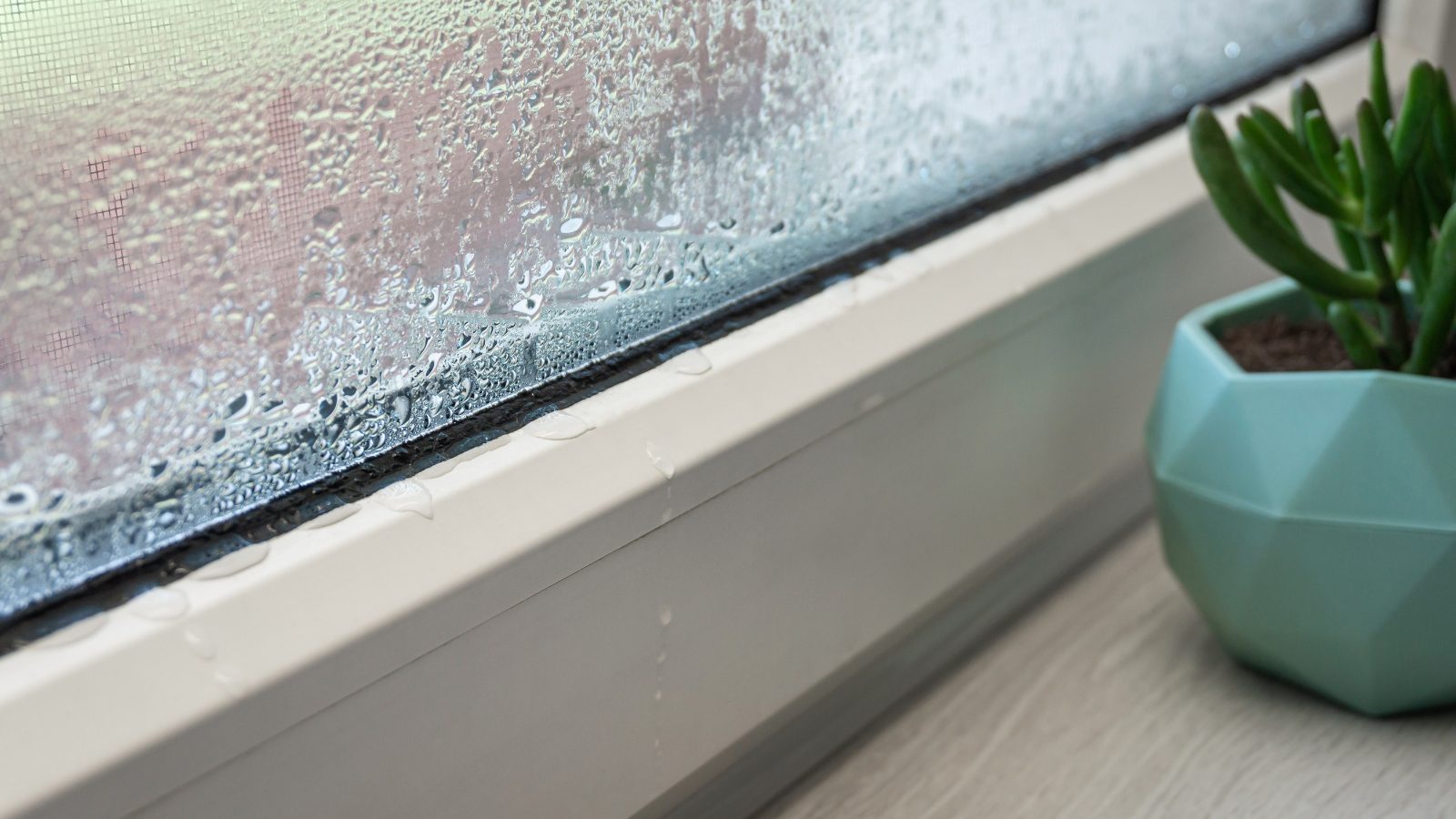
- Condensation: dry it quickly when it forms on windows, walls or pipes, and remove the source. The EPA says condensation can be a sign of high humidity.
- When it’s humid outside: run the air conditioner or a dehumidifier.
See the EPA’s full guide for the rest. A wet basement is its own problem; our guide to water in the basement after rain covers it.
This weekend
Leave the bathroom fan running for a while after a shower, not just during it. A fan on a timer switch makes that automatic.
When the AC is running and it’s still muggy
Your air conditioner removes moisture as well as heat. When it doesn’t, the house feels clammy even at a cool temperature. Three common reasons:
- It’s too big for the house. The Department of Energy notes that an oversized system turns on and off frequently, which wears out its controls. Short cycles also give it less time to dehumidify.
- The condensate drain is clogged. The DOE says a blocked drain channel stops the unit from removing humidity and can stain walls or carpet.
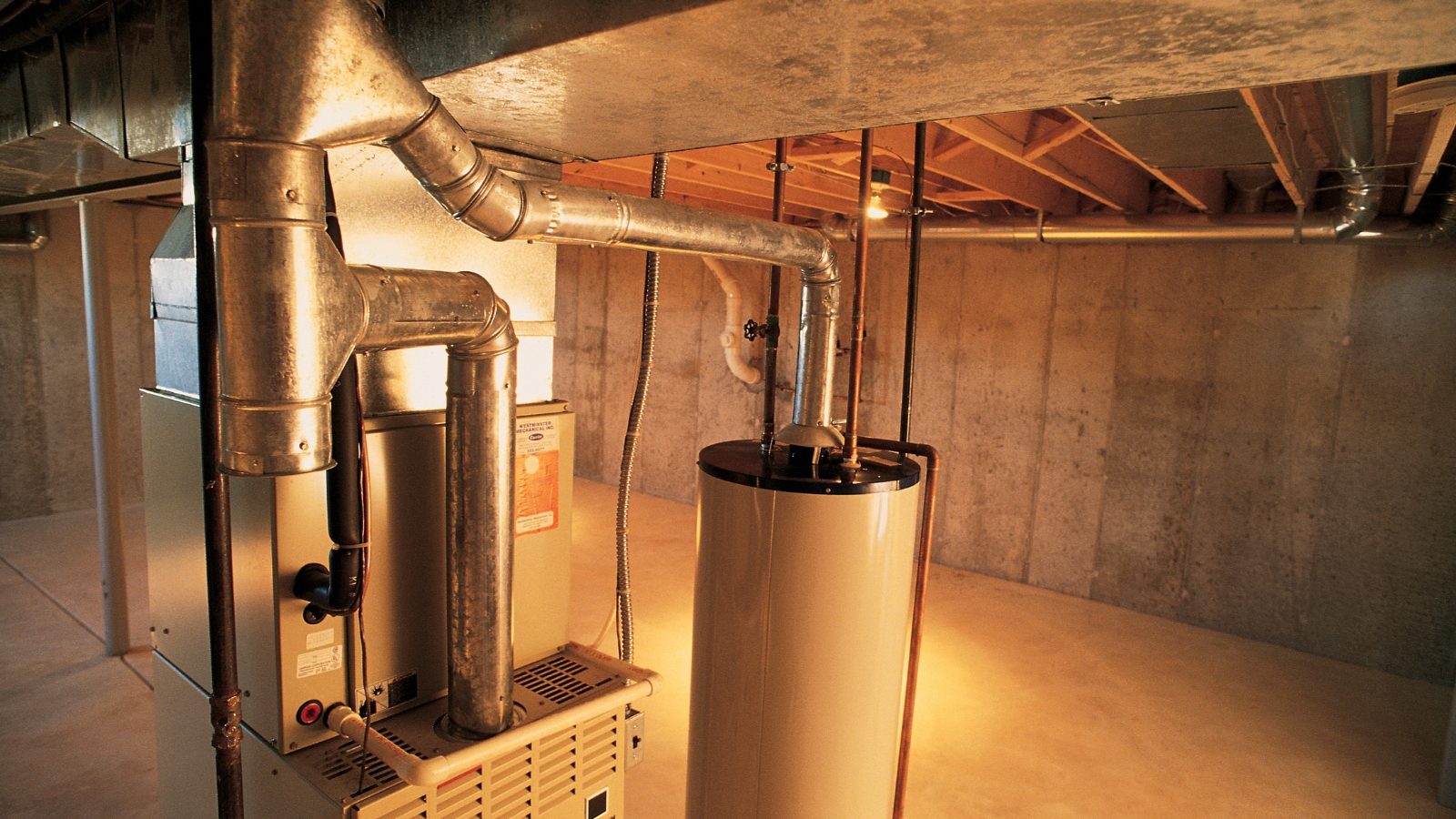
- The ducts leak. ENERGY STAR says that in a typical house, about 20% to 30% of the air moving through the ducts is lost through leaks, holes and poor connections. Ducts in an attic, crawlspace or garage can pull in humid outside air.
The dust problem
Some dust is just life: people, pets, fabric fibers and whatever comes in on shoes. But a house that gets dusty fast often has one of two problems: air sneaking in from outside, or a heating and cooling system that isn’t filtering well.
Upgrade the filter, carefully. The EPA’s guide to air cleaners recommends an HVAC filter rated at least MERV 13, or as high as your system will accommodate. It says most systems can take a MERV 13 without problems, but to check with an HVAC technician first, since a denser filter can restrict airflow.
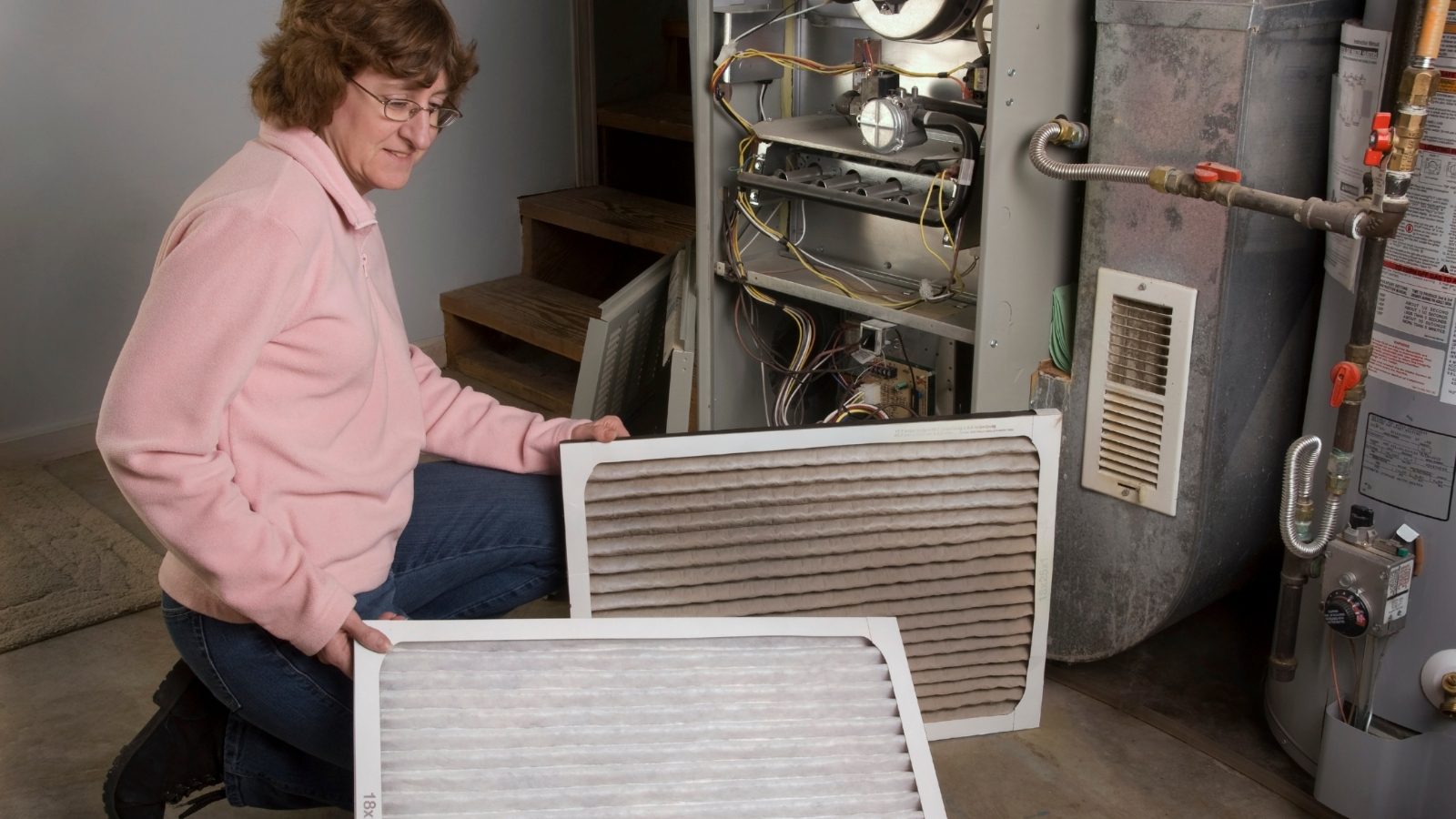
Change it on time. The EPA says manufacturers typically recommend replacement every 60 to 90 days, and to change filters more often if they come out heavily soiled. ENERGY STAR suggests checking it once a month.
Seal the ducts. Leaky return ducts in an attic, crawlspace or garage can pull in dusty air. ENERGY STAR recommends sealing leaks with mastic or metal tape, never duct tape, and lists rooms that are hard to heat or cool, or that stay stuffy, as a sign of duct problems.
Add a portable air cleaner to the rooms you use most. The EPA says to compare models by their clean air delivery rate (CADR): the higher it is, the more particles it removes and the bigger the room it can serve.
The EPA is clear that filters don’t replace the basics: reducing the sources and ventilating come first.
Advertisement
Dehumidifiers
For a damp basement or a muggy house in summer, a portable dehumidifier is the simplest fix. Look for an ENERGY STAR model, size it to the space following the manufacturer’s guidance, and set it to keep the room within the EPA’s range rather than as dry as possible. A model that can drain to a floor drain or sump through a hose saves emptying the bucket.
If you’re running a dehumidifier constantly in summer, it’s worth asking an HVAC contractor about the AC’s size and ducts, or about a whole-house dehumidifier.
Too dry in winter?
The opposite happens too. In cold weather, heated indoor air can get very dry, below the low end of the EPA’s 30% to 50% range. A humidifier can help, but keep an eye on windows: condensation on the glass is the sign you’ve overshot. Our drafty windows guide covers why cold glass sweats.
Your next step
Buy a hygrometer and check three rooms this week: the living room, a bedroom and the basement. If any read above 60%, start with fans and a dehumidifier. If the main floor stays high with the AC running, book an HVAC check. ENERGY STAR suggests scheduling cooling tune-ups in spring, before contractors get busy. For when the AC itself isn’t keeping up, see our guide to an AC that isn’t blowing cold air.
Advertisement
Questions readers ask
What should the humidity be in my house?
The EPA recommends keeping indoor relative humidity below 60%, and ideally between 30% and 50%. An inexpensive hygrometer will tell you where you are.
Why is my house humid even with the AC on?
Common reasons include an AC that's too big for the house and shuts off before it has time to pull moisture out of the air, a clogged condensate drain, leaky ducts, or moisture from showers, cooking and a damp basement. The Department of Energy notes that oversized systems cycle on and off frequently.
Why is my house so dusty?
Dust comes from outdoor air leaking in, people and pets, fabrics, and a heating and cooling system that isn't filtering well. The EPA suggests an HVAC filter rated at least MERV 13, or as high as your system can handle, changed on the manufacturer's schedule. Ask an HVAC technician before upgrading, since some systems can't take a denser filter.
Does a dehumidifier help?
Yes, especially in basements. The EPA lists running a dehumidifier or air conditioner when humidity is high as one of its main moisture-control steps.