Breaker Keeps Tripping? What It Means and When to Stop Resetting
A tripped breaker is a safety device doing its job. Here's how to reset one safely, how to tell an overloaded circuit from a real wiring problem, and the signs that mean it's time for an electrician.
Rooftop Daily editors choose every topic independently. Some guides include labeled partner offers, and we may be paid when you request a quote. How we make money
In this guide
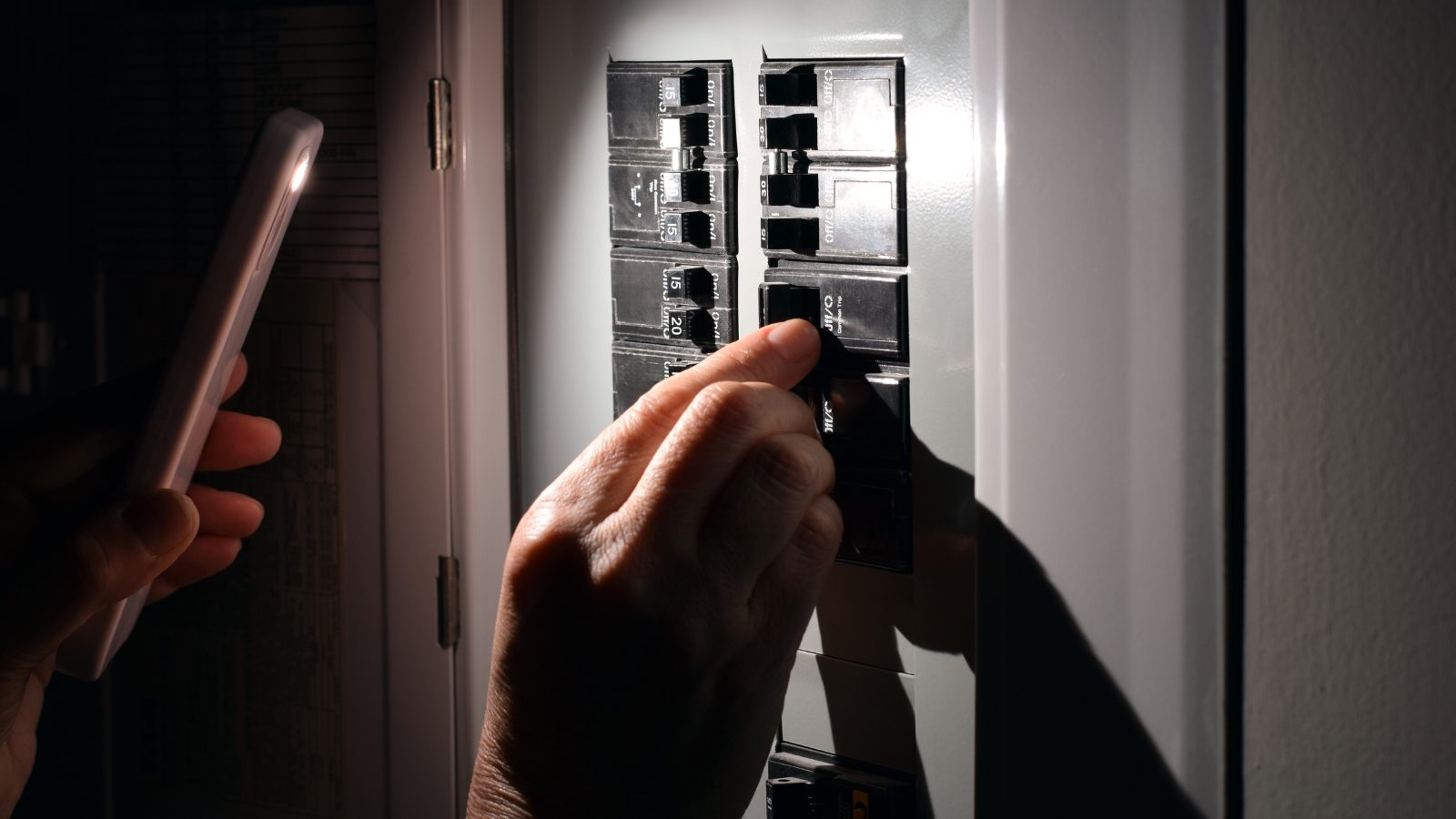
The lights in the kitchen go out, the microwave stops mid-minute, and you go down to the panel with your phone flashlight. Again. Most of the time a tripped breaker is the electrical system working exactly as designed. The trick is knowing which times aren’t.
The short answer
A breaker trips to keep wiring from overheating. Unplug or switch off what’s on that circuit, reset the breaker once, and turn things back on one at a time. If it trips when a particular combination is running, you’re overloading the circuit; spread the load out. If it trips again right after the reset, trips with nothing plugged in, feels hot, smells like burning or shows scorch marks, leave it off and call a licensed electrician.
A common version goes like this: the kitchen breaker trips around 7 every weekday morning, and never on weekends. The cause is the toaster, the coffee maker and the microwave all running at once while everyone rushes out the door. Plug the coffee maker into an outlet on a different circuit and the problem goes away. The cases worth worrying about look different, and they’re below.
Call a pro
If you smell burning or see smoke, sparks or scorch marks at the panel, an outlet or a switch, don’t touch it. Get everyone out and call 911. If the panel is wet, or you’re standing in water, don’t touch it at all.
Why breakers trip
There are a few common reasons, and they mean very different things.
- Overload. Too many things running on one circuit at once: a space heater, a hair dryer and a vacuum, say. Bob Vila’s guide says this is the usual reason a breaker trips. It’s the least worrying cause, and the fix is spreading the load around.
- Short circuit. A wire that carries current touches another wire it shouldn’t, often from a damaged cord, a loose connection in an outlet or a failing appliance. Signs can include sparks, popping or a burning smell. This is a fire hazard and an electrician’s job.
- Ground fault. Current leaks toward ground, often where water is involved: bathrooms, kitchens, laundry rooms, garages and outdoor outlets. GFCI outlets and breakers are designed to trip on this. A GFCI that trips after rain or when one appliance is plugged in is pointing you to a real problem.
- Arc fault. An AFCI breaker trips when it senses arcing, the kind of sparking that happens in damaged or loose wiring. ESFI advises testing AFCIs monthly with the test button, because they can stop working without any sign.
How to reset a breaker safely
- Unplug or switch off everything on the dead circuit. If you don’t know what’s on it, unplug what’s not working.
- Find the tripped breaker. Its handle will sit in the middle or in the off position, out of line with the others.
- Push it fully to off, then firmly back to on. Stand to the side, with dry hands and dry feet.
- Turn things back on one at a time, waiting a few minutes between each, as Bob Vila’s guide suggests. If it trips when one particular thing comes on, you’ve found your suspect.
- If it trips again right away, stop. Leave it off. Resetting a breaker over and over is unsafe.
This weekend
While you’re at the panel, label it. Have someone in the house call out what goes dark as you switch each breaker off. A clearly labeled panel saves time in every future outage and repair.
Advertisement
Read the pattern
| What you notice | What it often means | What to do |
|---|---|---|
| Trips when a space heater, hair dryer or microwave runs with other things | Overload | Move one item to a different circuit; avoid running them together |
| Trips right after you reset it, with nothing plugged in | Short or ground fault in the wiring, an outlet or a hard-wired device; or a failing breaker | Leave it off. Call an electrician |
| A GFCI outlet trips after rain, or in a damp room | Ground fault, often moisture | Call an electrician |
| Trips whenever one appliance is used | Fault in that appliance or its cord | Stop using it; have it repaired or replaced |
| The AC or heat pump breaker trips | Often a problem in the unit | Call an HVAC technician; if the system is old, see heat pump vs. furnace |
| The breaker is hot, buzzing or scorched | A failing breaker or connection | Don’t touch it. Call an electrician now |
When it’s time for an electrician
The Electrical Safety Foundation International is direct about it: breakers that trip or fuses that blow frequently can signify a serious electrical problem, and you should contact a licensed electrician. ESFI also lists these warning signs:
- Outlets or switches that are warm to the touch or discolored, which it says indicate dangerous heat buildup.
- Crackling, buzzing or sizzling sounds.
- Loose-fitting plugs that fall out of an outlet.
- Outlets or switches that don’t work properly.
Stop using any outlet or switch that shows one of those signs until it’s been checked.
Don’t swap in a bigger breaker. A breaker is sized to protect the wire it feeds. ESFI warns that the wrong size breaker can let wiring overheat, and that only a licensed electrician should install breakers.
If the circuit is just overloaded
An older house may have fewer circuits than the way you use it now. Short term, move high-draw appliances (space heaters, hair dryers, window ACs, microwaves) to different circuits and don’t run them together. Long term, an electrician can add a dedicated circuit where you need one. Extension cords aren’t the answer; ESFI says they’re meant for temporary use only.
Does a home warranty cover this?
Some home warranty plans include a home’s electrical system, with limits on what they’ll pay for and what counts as a covered failure. The Federal Trade Commission’s advice is to read the contract closely for exclusions and service fees before you buy. See our honest math on whether a home warranty is worth it.
Your next step
Next time the house is quiet, spend 20 minutes labeling your panel and pressing the test button on each AFCI breaker, as ESFI recommends monthly. Test GFCI outlets too, following the instructions on the outlet. If any don’t trip when tested, or anything on the warning list sounds familiar, book an electrician. For the rest of what’s worth checking before winter, see the fall-to-winter house checklist.
Advertisement
Questions readers ask
Is it dangerous if a breaker keeps tripping?
It can be. A breaker that trips now and then when you run a space heater and a hair dryer together is usually just an overloaded circuit. One that trips often, trips right after you reset it, or trips with nothing plugged in may mean a short circuit or ground fault. The Electrical Safety Foundation International says frequent tripping can signify a serious electrical problem and to contact a licensed electrician.
How many times can I reset a tripped breaker?
Reset it once after unplugging what's on the circuit. If it trips again right away, stop and call an electrician. Repeatedly resetting a breaker that keeps tripping is unsafe.
Why does my breaker trip with nothing plugged in?
That points to a problem in the wiring, an outlet, a switch or a hard-wired appliance on that circuit, such as a short or a ground fault, or to a failing breaker. It isn't a do-it-yourself fix. Leave the breaker off and call a licensed electrician.
Can I just put in a bigger breaker?
No. A breaker is sized to protect the wire it's connected to. ESFI warns that an incorrectly sized breaker can let wiring overheat. Only a licensed electrician should change breakers.